Posted inFeatures

10 issues that the presidential candidates absolutely need to discuss

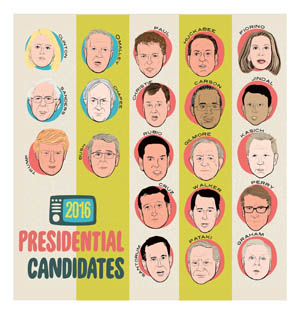
Theyโ€™re back. The multicar pileup that is the candidates vying for the GOP presidential nomination will be in California in less than two weeks. Fittingly, this second incarnation of a debate will go down at the Reagan National Presidential Library. The hopefuls surely will be feeling that Gipper spirit in their bones. Thankfully, only 10 candidates will be invited.

We here at RN&R donโ€™t expect the Republicans to give us tree-hugging liberals a lick of lip service. But, then again, we donโ€™t anticipate Hillary Clinton or the Dem nominee wannabes to preach to this Commie choir.

But if they did โ€ฆ

This week, nine News & Review writers from this companyโ€™s three papers in Reno, Chico and Sacramento settled on 10 topics. Ten issues. Just 10 things weโ€™d like to see the 2016 presidential hopefuls actually engage with meaningful discussion. Is that so much to ask?

Probably. But weโ€™re putting them out there, anyway.

A failed experiment

There is no greater crisis in the country, and no crisis less likely to be addressed by presidential candidates, than the issue of campaign money. Weโ€™ve seen the far-reaching repercussions of the decision made by the U.S. Supreme Court back in 2010, Citizens United v. Federal Elections Commission. Thatโ€™s the case in which the court held that the government could not restrict election expenditures by corporations, essentially saying that money is speech, and therefore protected by the First Amendment.

The issue is not that money is speech. We donโ€™t disagree with that. The problem is that, with its mandate, the Supreme Court ensconced in law the legal fiction that corporations are people. This cannot stand. But it will.

Democracy has failed. It has been destroyed by the unfathomable amounts of money that corporations wield in politics. While it is true that captains of industry have long forced legislation that does not serve the interests of the American people, in a purely pragmatic way it enhanced the American fantasy that people of merit have a larger voice. It was still a human voice, even if it was corrupt and selfish.

But corporations donโ€™t have a human voice. Generally, corporations exist to serve stockholdersโ€™ interests. The making of money, when it is not tempered by human conscience, always favors efficiency, shortcuts and quarterly profits over people.

Candidates recognize this reality, and thatโ€™s why candidates canโ€™t discuss it in a meaningful wayโ€”because theyโ€™ll lose if they donโ€™t โ€œearnโ€ corporate money.

Campaigns will spend $4.4 billion on television advertising in 2016. The greatest amount of formal political discussionโ€”debates and suchโ€”will take place on television. For many voters, this will be the primary method of education on political issues and which candidates stand on what side of the issues.

Advertising money changes how those who receive it treat candidates. Would Fox Newsโ€™ CEO Roger Ailes be kissing Trumpโ€™s ass if he werenโ€™t concerned about either ad dollars or influence?

Democracies, at their foundation, are about people. Corporations are not people. Corporations, due to their potential immortality and inhuman ability to collect resources, can influence legislation forever, disabling any single human from affecting inhumane laws over a lifetime. The press, which has a responsibility to keep a watchful eye on government, has been bought off. Legislators, who are dependent upon ever growing mountains of cash to get a seat at the table, canโ€™t win if they support campaign finance reform.

There is no hope, no foreseeable path beyond this quagmire. The American experiment is over. (D. Brian Burghart)

Like debating your racist uncle at Thanksgiving

It’s difficult to have meaningful talks about immigration reform when Trump spouts off about Mexico sending rapists over the border and Jeb Bush drops a term such as โ€œanchor baby.โ€

It gets worse. Not only has Trump proposed building a 2,000-mile wall to separate Mexico from the United States, he also wants to deport all undocumented immigrants and end birthright citizenship, a current right that awards legal status to anyone born in the United States, including children of undocumented immigrants.

Such verbal bombs and grandiose threats are pure political theater. At best theyโ€™re conversation starters. Mostly, theyโ€™re just divisive, inflammatory and harmful.

Itโ€™s time for the other candidates to publicly denounce Trumpโ€™s silly grandstanding (and, for that matter, Bushโ€™s ignorance). Itโ€™s time to call bullshit on racism.

Now is the time for legitimate candidates to shift the political fight away from whatโ€™s become the equivalent of debating your racist uncle at the Thanksgiving table and pledge support for a clear path to citizenship.

Immigration reform proposals must center on how all lives, undocumented or otherwise, can be improved by creating legal processes through which people become taxpaying, economy-boosting and productive members of society.

There needs to be discussions on educational resources, housing and job opportunities, training programs and other forms of integration.

We need to discuss how to be inclusiveโ€”not the oppositeโ€”because immigration reform benefits everyone. Even Donald Trump. (Rachel Leibrock)

A dysfunction we deserve?

Donald Trump has said that if he werenโ€™t running, that first Republican debate would have garnered 2 million viewers instead of a record 24 million. Thatโ€™s a sad indictment of our nationโ€™s political discourse. No one tuned in to hear a substantive discussion on substantive issuesโ€”not that there was any. Viewers wanted to hear what crass, petulant, imbecilic or simplistic thing Trump would say next, either because they find it entertaining or, more frighteningly, they consider it serious policy-making.

But that explains why the media is giving the current pre-primary presidential circus more attention than it deserves. Trump is good television. The networks are milking him for all heโ€™s worth. Late-night TV hosts and Saturday Night Live writers are thanking the comedy gods. Media outlets denouncing big money in politics are happily soaking advertisers looking to cash in on higher ratings, circulation spikes or swollen web hits.

Meanwhile, the increasingly longer campaignsโ€”Robert Kennedy announced his 1968 presidential bid in March of 1968โ€”require even more money to participate, which only further shuts out the average citizen, who canโ€™t cut a check for $10,000 to buy his โ€œfree speech.โ€ Viva democracy.

The solution, perhaps the desirable alternative regardless, is to end these ludicrous marathons and shorten the campaign season. Wait until election year and start the sophistry after Labor Day or July 4. Happy Birthday, America: a clown car for you!

As polling data from the last three presidential cycles has shown, a majority of Americans think the entire process is too long. We donโ€™t get the best candidates. We get survivors whoโ€™ve raised the most money. And as long as the electorate is a sucker for rhetoric over reason, hyperbole over sanity and delusion over reality, weโ€™ll fall for empty suits like Sarah Palin and Donald Trump and get exactly the government we deserve. (Bruce Maiman)

The F-word

Not every American will directly engage with the countryโ€™s immigration policies or wars overseas. They wonโ€™t necessarily come face-to-face with the governmentโ€™s budget or Obamacare. But every single American does confront one political issue every single day: food.

Even though so many problems plague our food system and millions of American families canโ€™t access food on a daily basis, the F-word is never brought up during presidential campaigns or debates. Itโ€™s never a bullet point on a list of talking points.

Yet, thereโ€™s so damned much to
talk about.

Thereโ€™s the health factorโ€”about 78.6 million adults, or 34.9 percent of the American population, are obese, according to the Centers for Disease Control and Prevention. We need better education about food, nutrition and health, and we need better, easier-to-understand labeling in our grocery stores and fast-food joints. And letโ€™s not forget the prolific use of antibiotics in the animals we eat. Thereโ€™s also big agricultureโ€™s enormous carbon footprint and, with looming effects of climate change, itโ€™s only a matter of time before our food system is in danger. And the White House is doing very little about it.

But whatโ€™s most appalling is that approximately one-in-seven households were food insecure in 2013, according to the U.S. Department of Agriculture. Thatโ€™s 49.1 million people who werenโ€™t always sure where or how theyโ€™d obtain their next meal. Among food issues, this is rightly the one that sometimes gets some attention. Unfortunately, the one thing helping out hungry Americans is also under attack.

Last February, President Barack Obama signed the 2014 Farm Bill, which is cutting $8.7 billion from the Supplemental Nutrition Assistance Program (SNAP) over 10 years. That translates to 850,000 households losing an average $90 per month in food stampsโ€”a major cut, considering the average household received $256.97 per month and the average person received less than $1.50 per meal last year. In March, the House Budget Committee introduced a budget plan that would cut SNAP funding by $125 billion between 2021 and 2025. Republicans have been after SNAP for a long timeโ€”will anyone defend this vital program?

In the coming years, more and more Americans are expected to go to bed hungry night after nightโ€”and Washington, D.C., is actually helping this health crisis unfold. (Janelle Bitker)

More taxes?!

Here’s how it works: Corporations and manufacturers burn fuels to make their products. These are products you use every day, from cars to plastic furniture in your backyard. A carbon tax puts a value on each unit of greenhouse gas emitted by a polluter, and the company either has to pay to pollute, or pollute less.

A carbon tax would transform America. It would generate new revenue from old-way corporations that canโ€™t quit dumping CO2 and more into the atmosphere. It would force the energy industry to focus on more efficient and climate-change friendly models. And, most importantly, a tax will reduce emissions.

This could be the single most transformative policy by any president in the past 50 years.

But will the candidates look to Californiaโ€”or other nations like Sweden and Australiaโ€”and adopt a carbon tax? Please. Iโ€™ll believe that the day Trump pulls his hair out. (Nick Miller)

Stay black

Candidates are going to avoid discussing ongoing American racism like the back end of one of those Iowa hogs.

Black Lives Matter began as a Twitter hashtag, generated by three young black women after George Zimmerman was acquitted in the fatal shooting of Trayvon Martin. Patrisse Cullors, Opal Tometi and Alicia Garza were looking for a way to collect tweets about violence. But the hashtag became a movement in the aftermath of Michael Brownโ€™s death a year ago.

And what has followed has been a revelationโ€”but only to those of us who werenโ€™t paying attention.

What Black Lives Matterโ€”and the backlash, such as โ€œall lives matterโ€ and โ€œblue lives matterโ€โ€”tells us is that most Americans never, ever believed blacks when they recounted the violence they experienced just for living in their black skin.

As the poet Claudia Rankine has written, โ€œThe condition of Black life is one of mourning.โ€

Some candidates are willing to discuss the movement. When Black Lives Matter interrupted a Bernie Sanders campaign event, that candidate issued a policy statement on institutional racism. Similar attempts to get attention from candidates Martin Oโ€™Malley and Hillary Clinton got a response, though not as welcoming as with Sanders.

Black Lives Matter activists were shown the door by Jeb Bushโ€™s security team.

Weโ€™d like to see the Black Lives Matter movement be part of the national dialogue. But weโ€™re not hopeful.

Meanwhile, every 28 hours, another hashtag with another black victimโ€™s name begins trending on social media. (Kel Munger)

Reproductive-rights real talk

The paradox of the anti-abortion movement reveals a philosophy long on ideology and short on credibility.

Such social conservatives typically rail against big government meddling, yet have no trouble telling people how to live their lives. Defeated in their sanctity-of-marriage cause, theyโ€™ve rekindled the sanctity of life as a campaign issue, with calls to defund Planned Parenthood, an organization that spends not a single federal dollar on abortion services. And claims it sells fetal tissue for profit have proven completely baseless as well.

Planed Parenthoodโ€™s primary focus is contraception, sex education and STD testing and treatment, services that are vital to comprehensive, preventive health care for women, yet are condemned by numerous pro-life organizations as immoral, harmful and demeaning. According to the Guttmacher Institute, the overwhelming majority of women obtaining abortions do so because they havenโ€™t the means or resources to raise that child in a nourishing environment. Sounds pretty family value-ish, yet those insisting we force the ill-equipped to be mothers also support reducing the services upon which such mothers depend.

In other words, in Family Values Land, the pre-born zygote is a beautiful child, but upon birth, the little rugrat is a parasite eating up tax dollars.

If pro-lifers want to prevent abortions, they should stop kidding themselves about โ€œabstinence onlyโ€โ€”it doesnโ€™t workโ€”and instead support comprehensive contraception use. Itโ€™s the main factor driving the long-term decline in teen pregnancy. They should also support vigorous sex education in public schools, currently mandatory in just 22 states (California isnโ€™t one of them; Nevada is, sort of). Only 13 require the information to be โ€œmedically accurate.โ€

Otherwise, put up or shut up: You can ban abortion, but you have to adopt every unwanted fetus when it comes to term as a child. Youโ€™ll still be an invasive nanny-stater, but at least youโ€™ll finally be living up to your pro-life name. (Bruce Maiman)

Higher politics

It’s hard to believe that, in 2015, people across the countryโ€”at least outside of Colorado, Alaska, Washington, Oregon and Washington, D.C.โ€”still get arrested and charged for something as simple as having a joint in their pocket.

According to marijuana reform advocacy group NORML, about 750,000 people in this country were arrested for marijuana violations in 2012, and the overwhelming majorityโ€”87 percent, or 652,500 peopleโ€”were charged with just possession.

Even so, most presidential candidates donโ€™t favor reform of this failed federal policy. Hillary Clinton has stated that sheโ€™d like to see how legalization plays out at the state level. Others, such as Ted Cruz and Mike Huckabee, say they support statesโ€™ rights to legalize it without federal intervention.

At the state level, there is a clear movement toward legalization. On top of the four states that have fully decriminalized pot, 24 have approved marijuana for medical uses and some have decriminalized possession of small amounts. And polls show that majorities in 25 states favor legalization, and initiatives to do just that may appear on the 2016 ballot in 11 states, including California.

Even given that groundswell of supportโ€”the majority of Americans, 52 percent, now favor legalizing weed, according to the General Social Survey. Thereโ€™s been little movement at the federal level.

The Obama administration has said it will respect state laws as long as certain conditions are met, but marijuana remains a Schedule 1 drug under the federal Controlled Substances Act of 1970, right alongside heroin. Considering the relatively benign effects of marijuana on human health and safety compared with other Schedule 1 hard drugs or, say, alcohol, thereโ€™s no sense in locking people up for using or possessing their recreational drug of choice.

Thatโ€™s not to mention a variety of potential benefits of regulating marijuana like tobacco or alcoholโ€”increased tax revenues, for instance, and kicking the legs out from under a black market for pot that drives violence, environmental degradation and other truly criminal activity.

Most Americans and an increasing number of state governments believe itโ€™s time to end the oppressive prohibition on marijuana. Will the stances of presidential hopefuls reflect that? (Howard Hardee)

War!

U.S. presidents have become skilled at manipulating Congress when it comes to war. They either avoid getting permission for going to war altogether, or they somehow suspend Congressโ€™ critical faculties and get what they want.

There are many examples, but hereโ€™s a couple: In June of 1950, President Harry Truman shocked Washington by effectively declaring war: โ€œI have ordered United States air and sea forces to give the Korean government troops cover and support.โ€ And, in 1991, President George H.W. Bush had deftly obtained a United Nations authorization for war before asking Congress for permission, putting members of Congress in the position of undercutting a U.S. president on the world stage.

In presidential campaign debates, presidential candidates have never been closely and rigorously questioned on how they would go to war or under what circumstances. If reporters donโ€™t do it, citizens should, in town hall-style meetings.

Defense spending, or specifically cuts to the military budget, isnโ€™t a flag candidates often wave. But the conversation needs to happen. U.S. military spending is actually down since 2010โ€”but there are candidates out there that aim to reverse this course. And theyโ€™re not all GOP hopefuls. Thatโ€™s a bad moveโ€”and worth talking about. (Dennis Myers and Nick Miller)

Even bigger, still a failure

Presidential hopeful Sen. Bernie Sanders supports the reintroduction of the Glass-Steagall Act, the now-defunct law designed and implemented following the stock market crash in 1929 to safeguard the publicโ€™s money by keeping commercial and investment banks separate. But Democratic Sen. Elizabeth Warren of Massachusetts has been the most aggressive voice in Washington when it comes to resurrecting the regulation and making โ€œtoo-big-to-failโ€ banks safer for investors. In fact, she and Arizona Sen. John McCain have introduced a bill to do just that. They argue that the lawโ€™s repeal 16 years ago led to the global financial crisis of 2008 and to the subsequent massive government bailouts.

Despite their bipartisan effort, youโ€™re unlikely to see Hillary Clinton or any of the serious GOP contenders take on the issue. When asked about Glass-Steagall in recent months, Clinton hasnโ€™t taken a positionโ€”something her Democratic challengers, including Martin Oโ€™Malley, a former Maryland governor, have increasingly honed in on during recent campaign speeches centering on Wall Street reform.

Candidatesโ€™ silence speaks to their ties to the big banks. But in Clintonโ€™s case, specifically, thereโ€™s the added awkwardness that the law was repealed back in 1999 at her husbandโ€™s request. To be fair, Glass-Steagall had been weakened since the time it was enacted by Congress in 1933, so by the time President Bill Clinton signed the Republicansโ€™ deregulation Gramm-Leach-Bliley Act, hammering the final nail into its coffin, the law had a lot less teeth than in prior decades.

Bill Clinton has denied that the demise of Glass-Steagall had anything to do with the financial crisis, and several prominent economists back him up. Others, however, including Democratic leader Harry Reid of Nevada (who voted to repeal Glass-Steagall) say it did. They say there may have been a perfect storm of factors in play, including the housing and credit bubbles, but most experts agree that the broad deregulation efforts, both during Clintonโ€™s administration and those preceding it, did greatly contribute to the financial meltdown.

Whatโ€™s more, the nation is still susceptible. In other words, Glass-Steagall is only a small part of the conversation that ought to take place to protect taxpayers from the wolves of Wall Street. (Melissa Daugherty)

Leave a comment

Your email address will not be published. Required fields are marked *

Posted inDennis Myers Memorial

10 issues that the presidential candidates absolutely need to discuss

illustrations by brian taylor

Theyโ€™re back. The multicar pileup that is the candidates vying for the GOP presidential nomination will be in California in less than two weeks. Fittingly, this second incarnation of a debate will go down at the Reagan National Presidential Library. The hopefuls surely will be feeling that Gipper spirit in their bones. Thankfully, only 10 candidates will be invited.

We here at RN&R donโ€™t expect the Republicans to give us tree-hugging liberals a lick of lip service. But, then again, we donโ€™t anticipate Hillary Clinton or the Dem nominee wannabes to preach to this Commie choir.

But if they did โ€ฆ

This week, nine News & Review writers from this companyโ€™s three papers in Reno, Chico and Sacramento settled on 10 topics. Ten issues. Just 10 things weโ€™d like to see the 2016 presidential hopefuls actually engage with meaningful discussion. Is that so much to ask?

Probably. But weโ€™re putting them out there, anyway.

A failed experiment

There is no greater crisis in the country, and no crisis less likely to be addressed by presidential candidates, than the issue of campaign money. Weโ€™ve seen the far-reaching repercussions of the decision made by the U.S. Supreme Court back in 2010, Citizens United v. Federal Elections Commission. Thatโ€™s the case in which the court held that the government could not restrict election expenditures by corporations, essentially saying that money is speech, and therefore protected by the First Amendment.

The issue is not that money is speech. We donโ€™t disagree with that. The problem is that, with its mandate, the Supreme Court ensconced in law the legal fiction that corporations are people. This cannot stand. But it will.

Democracy has failed. It has been destroyed by the unfathomable amounts of money that corporations wield in politics. While it is true that captains of industry have long forced legislation that does not serve the interests of the American people, in a purely pragmatic way it enhanced the American fantasy that people of merit have a larger voice. It was still a human voice, even if it was corrupt and selfish.

But corporations donโ€™t have a human voice. Generally, corporations exist to serve stockholdersโ€™ interests. The making of money, when it is not tempered by human conscience, always favors efficiency, shortcuts and quarterly profits over people.

Candidates recognize this reality, and thatโ€™s why candidates canโ€™t discuss it in a meaningful wayโ€”because theyโ€™ll lose if they donโ€™t โ€œearnโ€ corporate money.

Campaigns will spend $4.4 billion on television advertising in 2016. The greatest amount of formal political discussionโ€”debates and suchโ€”will take place on television. For many voters, this will be the primary method of education on political issues and which candidates stand on what side of the issues.

Advertising money changes how those who receive it treat candidates. Would Fox Newsโ€™ CEO Roger Ailes be kissing Trumpโ€™s ass if he werenโ€™t concerned about either ad dollars or influence?

Democracies, at their foundation, are about people. Corporations are not people. Corporations, due to their potential immortality and inhuman ability to collect resources, can influence legislation forever, disabling any single human from affecting inhumane laws over a lifetime. The press, which has a responsibility to keep a watchful eye on government, has been bought off. Legislators, who are dependent upon ever growing mountains of cash to get a seat at the table, canโ€™t win if they support campaign finance reform.

There is no hope, no foreseeable path beyond this quagmire. The American experiment is over. (D. Brian Burghart)

Like debating your racist uncle at Thanksgiving

It's difficult to have meaningful talks about immigration reform when Trump spouts off about Mexico sending rapists over the border and Jeb Bush drops a term such as โ€œanchor baby.โ€

It gets worse. Not only has Trump proposed building a 2,000-mile wall to separate Mexico from the United States, he also wants to deport all undocumented immigrants and end birthright citizenship, a current right that awards legal status to anyone born in the United States, including children of undocumented immigrants.

Such verbal bombs and grandiose threats are pure political theater. At best theyโ€™re conversation starters. Mostly, theyโ€™re just divisive, inflammatory and harmful.

Itโ€™s time for the other candidates to publicly denounce Trumpโ€™s silly grandstanding (and, for that matter, Bushโ€™s ignorance). Itโ€™s time to call bullshit on racism.

Now is the time for legitimate candidates to shift the political fight away from whatโ€™s become the equivalent of debating your racist uncle at the Thanksgiving table and pledge support for a clear path to citizenship.

Immigration reform proposals must center on how all lives, undocumented or otherwise, can be improved by creating legal processes through which people become taxpaying, economy-boosting and productive members of society.

There needs to be discussions on educational resources, housing and job opportunities, training programs and other forms of integration.

We need to discuss how to be inclusiveโ€”not the oppositeโ€”because immigration reform benefits everyone. Even Donald Trump. (Rachel Leibrock)

A dysfunction we deserve?

Donald Trump has said that if he werenโ€™t running, that first Republican debate would have garnered 2 million viewers instead of a record 24 million. Thatโ€™s a sad indictment of our nationโ€™s political discourse. No one tuned in to hear a substantive discussion on substantive issuesโ€”not that there was any. Viewers wanted to hear what crass, petulant, imbecilic or simplistic thing Trump would say next, either because they find it entertaining or, more frighteningly, they consider it serious policy-making.

But that explains why the media is giving the current pre-primary presidential circus more attention than it deserves. Trump is good television. The networks are milking him for all heโ€™s worth. Late-night TV hosts and Saturday Night Live writers are thanking the comedy gods. Media outlets denouncing big money in politics are happily soaking advertisers looking to cash in on higher ratings, circulation spikes or swollen web hits.

Meanwhile, the increasingly longer campaignsโ€”Robert Kennedy announced his 1968 presidential bid in March of 1968โ€”require even more money to participate, which only further shuts out the average citizen, who canโ€™t cut a check for $10,000 to buy his โ€œfree speech.โ€ Viva democracy.

The solution, perhaps the desirable alternative regardless, is to end these ludicrous marathons and shorten the campaign season. Wait until election year and start the sophistry after Labor Day or July 4. Happy Birthday, America: a clown car for you!

As polling data from the last three presidential cycles has shown, a majority of Americans think the entire process is too long. We donโ€™t get the best candidates. We get survivors whoโ€™ve raised the most money. And as long as the electorate is a sucker for rhetoric over reason, hyperbole over sanity and delusion over reality, weโ€™ll fall for empty suits like Sarah Palin and Donald Trump and get exactly the government we deserve. (Bruce Maiman)

The F-word

Not every American will directly engage with the countryโ€™s immigration policies or wars overseas. They wonโ€™t necessarily come face-to-face with the governmentโ€™s budget or Obamacare. But every single American does confront one political issue every single day: food.

Even though so many problems plague our food system and millions of American families canโ€™t access food on a daily basis, the F-word is never brought up during presidential campaigns or debates. Itโ€™s never a bullet point on a list of talking points.

Yet, thereโ€™s so damned much to
talk about.

Thereโ€™s the health factorโ€”about 78.6 million adults, or 34.9 percent of the American population, are obese, according to the Centers for Disease Control and Prevention. We need better education about food, nutrition and health, and we need better, easier-to-understand labeling in our grocery stores and fast-food joints. And letโ€™s not forget the prolific use of antibiotics in the animals we eat. Thereโ€™s also big agricultureโ€™s enormous carbon footprint and, with looming effects of climate change, itโ€™s only a matter of time before our food system is in danger. And the White House is doing very little about it.

But whatโ€™s most appalling is that approximately one-in-seven households were food insecure in 2013, according to the U.S. Department of Agriculture. Thatโ€™s 49.1 million people who werenโ€™t always sure where or how theyโ€™d obtain their next meal. Among food issues, this is rightly the one that sometimes gets some attention. Unfortunately, the one thing helping out hungry Americans is also under attack.

Last February, President Barack Obama signed the 2014 Farm Bill, which is cutting $8.7 billion from the Supplemental Nutrition Assistance Program (SNAP) over 10 years. That translates to 850,000 households losing an average $90 per month in food stampsโ€”a major cut, considering the average household received $256.97 per month and the average person received less than $1.50 per meal last year. In March, the House Budget Committee introduced a budget plan that would cut SNAP funding by $125 billion between 2021 and 2025. Republicans have been after SNAP for a long timeโ€”will anyone defend this vital program?

In the coming years, more and more Americans are expected to go to bed hungry night after nightโ€”and Washington, D.C., is actually helping this health crisis unfold. (Janelle Bitker)

More taxes?!

Here's how it works: Corporations and manufacturers burn fuels to make their products. These are products you use every day, from cars to plastic furniture in your backyard. A carbon tax puts a value on each unit of greenhouse gas emitted by a polluter, and the company either has to pay to pollute, or pollute less.

A carbon tax would transform America. It would generate new revenue from old-way corporations that canโ€™t quit dumping CO2 and more into the atmosphere. It would force the energy industry to focus on more efficient and climate-change friendly models. And, most importantly, a tax will reduce emissions.

This could be the single most transformative policy by any president in the past 50 years.

But will the candidates look to Californiaโ€”or other nations like Sweden and Australiaโ€”and adopt a carbon tax? Please. Iโ€™ll believe that the day Trump pulls his hair out. (Nick Miller)

Stay black

Candidates are going to avoid discussing ongoing American racism like the back end of one of those Iowa hogs.

Black Lives Matter began as a Twitter hashtag, generated by three young black women after George Zimmerman was acquitted in the fatal shooting of Trayvon Martin. Patrisse Cullors, Opal Tometi and Alicia Garza were looking for a way to collect tweets about violence. But the hashtag became a movement in the aftermath of Michael Brownโ€™s death a year ago.

And what has followed has been a revelationโ€”but only to those of us who werenโ€™t paying attention.

What Black Lives Matterโ€”and the backlash, such as โ€œall lives matterโ€ and โ€œblue lives matterโ€โ€”tells us is that most Americans never, ever believed blacks when they recounted the violence they experienced just for living in their black skin.

As the poet Claudia Rankine has written, โ€œThe condition of Black life is one of mourning.โ€

Some candidates are willing to discuss the movement. When Black Lives Matter interrupted a Bernie Sanders campaign event, that candidate issued a policy statement on institutional racism. Similar attempts to get attention from candidates Martin Oโ€™Malley and Hillary Clinton got a response, though not as welcoming as with Sanders.

Black Lives Matter activists were shown the door by Jeb Bushโ€™s security team.

Weโ€™d like to see the Black Lives Matter movement be part of the national dialogue. But weโ€™re not hopeful.

Meanwhile, every 28 hours, another hashtag with another black victimโ€™s name begins trending on social media. (Kel Munger)

Reproductive-rights real talk

The paradox of the anti-abortion movement reveals a philosophy long on ideology and short on credibility.

Such social conservatives typically rail against big government meddling, yet have no trouble telling people how to live their lives. Defeated in their sanctity-of-marriage cause, theyโ€™ve rekindled the sanctity of life as a campaign issue, with calls to defund Planned Parenthood, an organization that spends not a single federal dollar on abortion services. And claims it sells fetal tissue for profit have proven completely baseless as well.

Planed Parenthoodโ€™s primary focus is contraception, sex education and STD testing and treatment, services that are vital to comprehensive, preventive health care for women, yet are condemned by numerous pro-life organizations as immoral, harmful and demeaning. According to the Guttmacher Institute, the overwhelming majority of women obtaining abortions do so because they havenโ€™t the means or resources to raise that child in a nourishing environment. Sounds pretty family value-ish, yet those insisting we force the ill-equipped to be mothers also support reducing the services upon which such mothers depend.

In other words, in Family Values Land, the pre-born zygote is a beautiful child, but upon birth, the little rugrat is a parasite eating up tax dollars.

If pro-lifers want to prevent abortions, they should stop kidding themselves about โ€œabstinence onlyโ€โ€”it doesnโ€™t workโ€”and instead support comprehensive contraception use. Itโ€™s the main factor driving the long-term decline in teen pregnancy. They should also support vigorous sex education in public schools, currently mandatory in just 22 states (California isnโ€™t one of them; Nevada is, sort of). Only 13 require the information to be โ€œmedically accurate.โ€

Otherwise, put up or shut up: You can ban abortion, but you have to adopt every unwanted fetus when it comes to term as a child. Youโ€™ll still be an invasive nanny-stater, but at least youโ€™ll finally be living up to your pro-life name. (Bruce Maiman)

Higher politics

It's hard to believe that, in 2015, people across the countryโ€”at least outside of Colorado, Alaska, Washington, Oregon and Washington, D.C.โ€”still get arrested and charged for something as simple as having a joint in their pocket.

According to marijuana reform advocacy group NORML, about 750,000 people in this country were arrested for marijuana violations in 2012, and the overwhelming majorityโ€”87 percent, or 652,500 peopleโ€”were charged with just possession.

Even so, most presidential candidates donโ€™t favor reform of this failed federal policy. Hillary Clinton has stated that sheโ€™d like to see how legalization plays out at the state level. Others, such as Ted Cruz and Mike Huckabee, say they support statesโ€™ rights to legalize it without federal intervention.

At the state level, there is a clear movement toward legalization. On top of the four states that have fully decriminalized pot, 24 have approved marijuana for medical uses and some have decriminalized possession of small amounts. And polls show that majorities in 25 states favor legalization, and initiatives to do just that may appear on the 2016 ballot in 11 states, including California.

Even given that groundswell of supportโ€”the majority of Americans, 52 percent, now favor legalizing weed, according to the General Social Survey. Thereโ€™s been little movement at the federal level.

The Obama administration has said it will respect state laws as long as certain conditions are met, but marijuana remains a Schedule 1 drug under the federal Controlled Substances Act of 1970, right alongside heroin. Considering the relatively benign effects of marijuana on human health and safety compared with other Schedule 1 hard drugs or, say, alcohol, thereโ€™s no sense in locking people up for using or possessing their recreational drug of choice.

Thatโ€™s not to mention a variety of potential benefits of regulating marijuana like tobacco or alcoholโ€”increased tax revenues, for instance, and kicking the legs out from under a black market for pot that drives violence, environmental degradation and other truly criminal activity.

Most Americans and an increasing number of state governments believe itโ€™s time to end the oppressive prohibition on marijuana. Will the stances of presidential hopefuls reflect that? (Howard Hardee)

War!

U.S. presidents have become skilled at manipulating Congress when it comes to war. They either avoid getting permission for going to war altogether, or they somehow suspend Congressโ€™ critical faculties and get what they want.

There are many examples, but hereโ€™s a couple: In June of 1950, President Harry Truman shocked Washington by effectively declaring war: โ€œI have ordered United States air and sea forces to give the Korean government troops cover and support.โ€ And, in 1991, President George H.W. Bush had deftly obtained a United Nations authorization for war before asking Congress for permission, putting members of Congress in the position of undercutting a U.S. president on the world stage.

In presidential campaign debates, presidential candidates have never been closely and rigorously questioned on how they would go to war or under what circumstances. If reporters donโ€™t do it, citizens should, in town hall-style meetings.

Defense spending, or specifically cuts to the military budget, isnโ€™t a flag candidates often wave. But the conversation needs to happen. U.S. military spending is actually down since 2010โ€”but there are candidates out there that aim to reverse this course. And theyโ€™re not all GOP hopefuls. Thatโ€™s a bad moveโ€”and worth talking about. (Dennis Myers and Nick Miller)

Even bigger, still a failure

Presidential hopeful Sen. Bernie Sanders supports the reintroduction of the Glass-Steagall Act, the now-defunct law designed and implemented following the stock market crash in 1929 to safeguard the publicโ€™s money by keeping commercial and investment banks separate. But Democratic Sen. Elizabeth Warren of Massachusetts has been the most aggressive voice in Washington when it comes to resurrecting the regulation and making โ€œtoo-big-to-failโ€ banks safer for investors. In fact, she and Arizona Sen. John McCain have introduced a bill to do just that. They argue that the lawโ€™s repeal 16 years ago led to the global financial crisis of 2008 and to the subsequent massive government bailouts.

Despite their bipartisan effort, youโ€™re unlikely to see Hillary Clinton or any of the serious GOP contenders take on the issue. When asked about Glass-Steagall in recent months, Clinton hasnโ€™t taken a positionโ€”something her Democratic challengers, including Martin Oโ€™Malley, a former Maryland governor, have increasingly honed in on during recent campaign speeches centering on Wall Street reform.

Candidatesโ€™ silence speaks to their ties to the big banks. But in Clintonโ€™s case, specifically, thereโ€™s the added awkwardness that the law was repealed back in 1999 at her husbandโ€™s request. To be fair, Glass-Steagall had been weakened since the time it was enacted by Congress in 1933, so by the time President Bill Clinton signed the Republicansโ€™ deregulation Gramm-Leach-Bliley Act, hammering the final nail into its coffin, the law had a lot less teeth than in prior decades.

Bill Clinton has denied that the demise of Glass-Steagall had anything to do with the financial crisis, and several prominent economists back him up. Others, however, including Democratic leader Harry Reid of Nevada (who voted to repeal Glass-Steagall) say it did. They say there may have been a perfect storm of factors in play, including the housing and credit bubbles, but most experts agree that the broad deregulation efforts, both during Clintonโ€™s administration and those preceding it, did greatly contribute to the financial meltdown.

Whatโ€™s more, the nation is still susceptible. In other words, Glass-Steagall is only a small part of the conversation that ought to take place to protect taxpayers from the wolves of Wall Street. (Melissa Daugherty)
Dennis Myers was the news editor of the Reno News & Review. He was a journalist for more than four decades. In 1987-88 he was chief deputy secretary of state of Nevada. He was coauthor of Uniquely...

Gift this article