
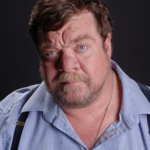

A former Reno resident lost her job as a fictional bounty hunter in a galaxy far, far away after a remark she made on social media intensified an ongoing campaign to “cancel” her — and apparently was the last straw for her bosses at Lucasfilm.
Gina Carano, an actor and former mixed martial artist who played the mercenary Cara Dune on the TV series “The Mandalorian,” got fired Feb. 10 after posting an Instagram comment comparing the persecution of Jews in Nazi Germany to the criticism of contemporary American conservatives. Luscasfilm’s statement announcing Carano’s termination noted that “her social media posts denigrating people based on their cultural and religious identities are abhorrent and unacceptable.”
Was her firing — and the social media assaults on other people who have made controversial comments — an example of rampant “cancel culture” or a predictable, deserved consequence of bad behavior?
Local campaign begins
A team of University of Nevada, Reno, students has waded into that national debate. Their campaign encourages civility over “cancellation” as a response when people take issue with other people’s opinions or actions. The students’ effort is directed at local small businesses that have a lot to lose when a comment made by an owner or employee sparks a backlash on the internet.
Carano, who also was dropped by her talent agency in the wake of the controversy, landed a film job on Feb. 12, two days after her firing. But small businesses or less well-known individuals often face dire and long-lasting consequences when they become targets of organized boycotts or frenzied attacks on the Web, the students said.

Respect, not rage
The Radiate Respect campaign is focused on teaching students and consumers alternative methods of communicating without the need of canceling people or businesses. The team also is equipping Reno small businesses with educational tool kits to teach techniques for prevention and intervention of cancelation efforts.
“Cancel culture teaches people they are unable to learn and grow from their mistakes” said Rachael Reyes, a student at UNR’s Reynolds School of Journalism and the account executive for the campaign. “Critically understanding the difference between an honest mistake and toxic patterns is the key to knowing when to forgive.”
The effort evolved from the five students’ participation in the PRSSA Bateman competition, a national case study competition for students to carry out a full public relations campaign. This year’s topic is “promoting civil discourse in American society.”

Risk to small businesses
“Unlike celebrities or large corporations, small businesses are not very well equipped to handle situations where there’s a group effort to cancel them,” said Ally Stemen, the campaign’s media relations manager. “They don’t have a huge team behind them to handle things like that.”
The students reached out to 16 local businesses and Junkee Clothing Exchange owner Jessica Schneider to assist in the campaign. Schneider had an experience with “cancel culture” last summer, when she posted comments about several women who were depicted in a photo taking part in the riot that followed a peaceful Black Lives Matter protest in Reno. A video also showed the women entering Reno City Hall after vandals shattered the building’s windows and glass doors.
Some social media users then accused Schneider of fat shaming the women of color. Her employees also expressed disappointment over her remarks. Schneider posted a video apology, pledged to get counseling and decided to take a step back from her business for a time.
But her sincerity and ability to learn from a mistake weren’t enough to sway many social media trolls. The cyber mob closed in, more vengeful than ever. The experience remains haunting.

A mob mentality
“Every day I am learning and growing from my past mistakes and completely agree with the fact that people should be held accountable for their wrongdoings,” Schneider wrote in a statement to the Reno News & Review.
“However, what I experienced went beyond just accountability — it escalated to doxing, cyberbullying and harassment. Cancel culture teaches people that they can’t make mistakes or learn from them. There are better and more effective approaches to accountability without trying to ruin a person’s entire livelihood.”
Doxing, the technique of putting someone’s personal information on the internet to encourage further harassment, has become another weapon of attack against those being punished. Once someone becomes a target, attacks often escalate, Stemen said. She said Schneider is brave for trying to help others avoid what she went through. “By recovering from cancellation and speaking out about her experiences, others can learn and grow from that experience,” Stemen said.
Call-in, call-out
The Radiate Respect campaign offers local businesses and individuals tool kits that will help them avoid or deal with situations that may lead to people trying to cancel them. The campaign emphasizes communications skills. “Calling in,” Stemen said, means discussing the perceived offenses with the person who may be at fault in an empathetic way. It helps cultivate a mutual understanding of differences through reflective, not reactive, language.
“Calling out,” she said, is a method of communication that is appropriate when there’s an immediate need to stop an idea or remark from causing further harm. Stemen said that technique is appropriate when calling in is not effective or accessible, such as when addressing celebrities or public figures online. The call-in, call-out methods, she said, still hold people accountable without ending their careers or livelihoods.

Some pushback
When the Radiate Respect campaign debuted on social media, some critics defended cancellation as a time-honored way for the public to register disapproval and for groups that formerly had little power to force societal change. The power of boycotts, after all, helped end slavery in Great Britain and was promoted by Mahatma Gandhi in the fight for India’s independence.
“I’ve always been a strong believer in speech fighting speech, and that you can choose where you want to spend your money,” said Mike Higdon, a Reno media professional. “That’s centuries old. I think that’s appropriate as an individual or as a group. The internet allows larger groups to have larger voices than they ever had before.”
Higdon asked the team members if what they were calling cancel culture is actually a method of public accountability, a means of forcing people to face the consequences of their words or actions. He and the students communicated; they discovered that they agreed.
Crossing the line
“I’m all for accountability,” Higdon said. “Don’t patronize a store; do call attention to someone’s persistent racism. But it becomes toxic when people start harassing businesses or individuals in really nasty ways. You see it turn into doxing or just being vulgar and gross. There’s a huge line that shouldn’t be crossed between taking action as a group and basically terrorizing folks. That’s an important thing to push back on.”
It’s relevant to call out a disparaging comment, he said, but some people “get an adrenaline rush from relentlessly calling people out and getting very ugly and very threatening. The majority of people move on (if the matter is resolved) and then there’s a group that can’t let it go and want to make people feel small and scare them.”
Stemen said the campaign isn’t trying to end boycotts or other social activism, especially if the offenders have indulged in persistent racism, sexism, homophobia or other aberrations. “What we’re saying is to give people a second chance,” she said. “One mistake shouldn’t ruin their lives and an effort to correct them shouldn’t lead to a mob mentality.”

Online review sites
People who lash out on the internet use social media and review sites like Yelp as weapons, surveys show.
The Radiate Respect team surveyed local businesses and the results indicate that 91.7 percent of small businesses surveyed believe cancel culture is a threat. Of the 164 respondents, 81% said they have seen a business be canceled and 66% said they have taken part in cancelation efforts.
More than 45% of local respondents found the most incivility comes from review platforms while 40.9% believe it comes from social media. Additionally, 54.7% believe that COVID-19 has increased the level of incivility on review platforms.
“Through our research, we found that 81.6% of respondents had witnessed a business being canceled via social media,” Stemen said. “More than 65% of respondents believe that the age demographic that does the most canceling is ages 18-24.”
Who joins the fray?
The theory that many of those participating in internet cancelling campaigns are young people is backed up by other surveys. A survey by Politico indicated that the online movement is the most popular and practiced among younger voters ages 18-34.
“Age is one of the most reliable predictors of one’s views. Members of Generation Z are the most sympathetic to punishing people or institutions over offensive views, followed closely by Millennials, while GenXers and Baby Boomers have the strongest antipathy towards it. Cancel culture is driven by younger voters. A majority (55%) of voters 18-34 say they have taken part in cancel culture, while only about a third (32%) of voters over 65 say they have joined a social media pile-on.” — Ryan Lizza, Politico.
Is it really a ‘culture?’
There’s also a debate about whether the term “cancel culture” is even warranted. It’s defined on dictionary.com as “the practice of withdrawing support for (or canceling) public figures and companies after they have done or said something considered objectionable or offensive.”
Higdon said withdrawing support is a time-honored method of expressing disapproval, but it can become toxic when multiplied by the internet.
A lack of diversity
“The term cancel culture is a catchphrase, up there with ‘politically correct’ or ‘snowflake;’ words that have been weaponized,” he said. “It’s hard to wrap your arms around what it is.” There’s a big difference between going after a public figure or a local business, he said.
Higdon said when businesses are accused of insensitivity toward minority groups or LGBT people, it often happens because the business lacks diversity. “If people are complaining about an ad, for example, it may be that people who created the (ad) content just didn’t have enough diversity in the room,” he said.
“That’s a teachable moment for that business. Calling them out allows them to see it from a perspective that’s not their own. An appropriate level of call out is valid to let them know and they can address that. Doing that, I think, is super positive for society.”
Toxic spaces
When the lesson devolves into what could be a death sentence for the business or the disruption of a person’s life, he said, the protest becomes poisonous.

“You see people leaving social media when things get nasty, and when rational people cede the space to the trolls, that makes the internet look more and more toxic,” Higdon said.
“…All of us are going to make mistakes. People make off-handed comments and make gaffs, whether they are big or small. It’s nice when it’s resolved quickly; it’s awful when it turns into a mob attack.”
A last resort
“The bottom line is don’t be a terrorist and harass people. When something is offensive to a lot of people, an apology is warranted. When it’s made, accept the apology.” — Mike Higdon, Reno media professional.
Stemen said that social media and review site campaigns against businesses or people “should be more of a last resort effort.” She said communication always should be the first tool at hand.
The UNR team is using the same social media platforms as the cancel campaigns, including @RadiateRespect on Instagram and Facebook, to get the word out about the Radiate Respect effort.
“We’re hopeful that other people can learn from those instances where cancel culture led to toxic consequences,” she said. “And then they can teach others. We’re hoping (the campaign) goes further and further in the online threads.”
Today, July 6 in the Wells St. coffee shop across the street from a church, I saw the poster saying something like 2020 was tough on all of us, show one another respect. Exactly. Thank you, radiate respect, for putting this idea out and about.
Doxxing is not cool and can threaten lives. But boycotting is a choice about how you spend your money and who you want to support. It’s a form of protest and commentary.