
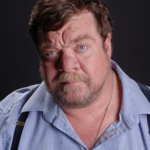

When Arlan Melendez was born in 1947, the Reno-Sparks Indian Colony was a 26-acre enclave surrounded by the city of Reno, and the federal government called the shots for all American Indian reservations, whose tribal members had limited control over their own governance.
Today, the colony—a federally recognized tribe whose members include people from the three Great Basin tribes of the Paiute, Shoshone and Washoe—presides over more than 15,000 acres of land. The community is supported by tribally owned businesses and by sales taxes collected from commercial tenants including Walmart, and now boasts a $20 million tribal health center that serves the colony members and all urban Indians.
The tribe, with 1,333 members, has been fully self-governing since the 1970s, when Congress passed the Indian Self-Determination and Education Assistance Act. That law allowed for tribes to have greater autonomy and assume the responsibility for programs and services administered to them.
“In spite of his considerable accomplishments and his title, Chairman Melendez does not have an arrogant bone in his body. He carries himself with humility and a sense of service to his people first.”
Bob Fulkerson, Reno activist
“The (law) worked against the paternalism, the way the federal government had been treating tribes,” said Melendez, who retired as chairman of the Reno-Sparks Indian Colony in December after 36 years on the tribal council—32 of them as chairman. “The tribes basically took over all the programs and developed them themselves, coming up with their own plans. … It’s a lot better. We can design more flexible programs that work.”
As tribal chairman, Melendez has overseen the management of those programs and was at the helm of the council when the panel faced big decisions that would guide the community’s future. The colony pioneered a tax system now called the “Nevada model,” which uses the revenue that would have been paid to the state for the tribe’s benefit, and formed close ties with other Nevada tribes and local governments.
On its website, the Reno-Sparks Indian Colony described Melendez’s decades of uninterrupted leadership as “unprecedented in Indian Country, as are his appointments to federal, state and tribal government posts.”
But now, Melendez said, it’s time to step down. He is 76 and would be 80 at the end of his term if he was re-elected. He didn’t want to still be running “from meetings to meetings all day” and flying off to other states and Washington, D.C., to serve on regional and national panels or lobby Congress. Still, he said, he would do it all over again.
“Even though it’s challenging at times, with external and internal conflicts, I think when you accomplish something, like building a new health center or bringing in new businesses like Walmart, it’s worth it.” Melendez said.
“I’ve been fortunate in that I’ve had the support of the tribal council. There are some tribes that I’ve witnessed where the chairman doesn’t have that support. That’s sad, because you aren’t going to get anywhere without it. In-fighting holds the tribe back. The enemy isn’t always on the outside; sometimes, the enemy comes from within.”
Arlan Melendez
“… We’ve had results. I’ve been fortunate in that I’ve had the support of the tribal council. There are some tribes that I’ve witnessed where the chairman doesn’t have that support. That’s sad, because you aren’t going to get anywhere without it. In-fighting holds the tribe back. The enemy isn’t always on the outside; sometimes, the enemy comes from within.”
A career in politics wasn’t on his radar when he was a young man. A 1965 graduate of Earl Wooster High School, Melendez served in the Marine Corps in Vietnam. After his discharge, he earned a degree at Truckee Meadows Community College and later attended classes at the University of Nevada, Reno. He worked at the U.S. Department of Fish and Wildlife and Pyramid Lake Fisheries and was elected to two two-year terms on the RSIC tribal council, starting in 1987.
Rather than compete for a third term on the council, he won the race for the chairmanship in 1991. Although the work was always hectic and sometimes grueling, he kept putting his name back on the ballot—and winning. He never ran unopposed, he said, and never faced a recount in a close election. He made decisions for the good of the tribe, he said, rather than based on how they might affect his chances for re-election—such as the controversy over what was called “dual enrollment.” That policy allowed people to be on the membership rolls of the urban colony and another tribe, such as the Pyramid Lake Paiutes, at same time, something Melendez thought eroded the colony’s tribal sovereignty.
“Nobody wanted to touch that issue,” he said. “You have to figure that half the people want it, and half are against it. If you take that on, you risk not getting re-elected. If your goal is to stay in office, it’s best not to touch that.”
Even his parents, who held dual enrollments, were against the change, he said. “But if you really think about it, we are elected to do the right thing,” he said. “I was in favor of it because I felt that by having allegiance to one tribe and also defining who your membership is, it will enhance sovereignty of this tribe, because if you don’t do that people can go back and forth. … They would have to choose (enrollment in) one or the other.”
Even though Melendez favored the measure, he insisted the issue be decided by a vote of the people. It passed; Melendez was re-elected.
“If they voted against it, we would have lived with the dual enrollment,” he said.
Melendez also has lent his and the colony’s support to statewide and regional issues affecting Indigenous people.
A battle about kitty litter
Bob Fulkerson, the former executive director of the Progressive Leadership Alliance of Nevada, worked with Melendez in 1999 when the tribe opposed a plan by the Chicago-based Oil-Dri Corporation to create a massive cat litter strip mine and manufacturing plant adjacent to Reno-Sparks Indian Colony homes and lands in Hungry Valley. The Reno-Sparks Chamber of Commerce and the Economic Development Authority of Western Nevada favored the project.
“Our small coalition met at tribal offices nearly once a month to strategize how to fight the mine,” Fulkerson recalled. “Arlan led the sessions with tribal leaders and non-native activists, developing and implementing plans for marches, protests, lawsuits, lobbying and everything we could throw at the bastards.”

When the Washoe County Commission denied the mine’s special-use permit in 2002, it was the first time a Nevada county had turned down a mining project, records show. The colony eventually purchased thousands of additional acres in Hungry Valley, including the proposed mine site and associated mineral rights, to protect it from future onslaughts.
Fulkerson noted other instances when Melendez and the colony stood up against the power of the mining industry, including the recent attempts by Nevada tribes to stop a lithium mine at Thacker Pass in Northern Nevada.
“In spite of his considerable accomplishments and his title, he does not have an arrogant bone in his body,” Fulkerson said. “He carries himself with humility and a sense of service to his people first. … He deserves to go down in Nevada history along with other notable elected officials—leaders like Paul Laxalt, Harry Reid and Mike O’Callaghan.”
Others who have worked with Melendez noted his calm demeanor and his ability to listen to people on all sides of an issue.
“You have to try to build harmony within your tribal council,” Melendez said. “That doesn’t mean you have to have everyone on your side. … You have to listen to their ideas and not downplay what they are saying. … You have to listen to ideas and consider them.”
Diversifying the tribe’s economy
Under Melendez’s leadership, the tribe moved away from its dependence on revenue from its smoke shops. He noted that other local governments are funded by taxes and don’t run businesses. By expanding its trust lands and gaining tenants like Walmart and car dealerships, the colony can support its services even as the demand for tobacco products continues to decline.
“A state law in 1991 allows tribes to collect taxes equal to what the state charges and use that for their own benefit,” Melendez said. “It’s not like that in every state. … The Nevada model is the best tax-sharing agreement in the country.” That revenue pays for essential government functions, including police and social services.
Melendez gaveled the tribal council to order for the last time on Dec. 13. The Reno-Sparks Indian Colony’s new chairman, Daryl “Doug” Gardipe, was sworn in the same day, as were the other tribal council members. Plenty of issues remain, including finding solutions to more affordable housing and building a wellness center next to the health center. Melendez said he probably will continue to serve on committees during his retirement.
But first, he wants to spend more time with his wife, Joyce, his four adult children, nine grandchildren and one great-grandchild. Travel, hiking and fishing are on the agenda, he said. He intends to “rest through the winter,” then continue to work for the betterment of the colony. His energy, he said, comes from his “spiritual side.”
“My mother used to always say your physical body is going to wear out,” Melendez said. “You pray for strength that is going to come from the Creator. Our tradition talks about rising in the morning and praying for strength and protection. I’ve always believed that, and so I pray about it. When the odds are against you, rely on the Creator to help.”